Family routines examples can transform chaotic mornings into calm, productive starts. They turn stressful evenings into peaceful wind-downs. And they help everyone in the household know what to expect, and when to expect it.
Here’s the thing: kids thrive on predictability. Adults do too, even if they won’t admit it. A solid family routine reduces decision fatigue, cuts down on arguments, and creates space for connection. Research from the American Academy of Pediatrics shows that children with consistent daily routines perform better in school and experience less anxiety.
But what does a good family routine actually look like? This guide breaks down practical family routines examples for every part of the day. From morning wake-ups to bedtime tuck-ins, these schedules are designed to fit real life, not some picture-perfect Pinterest board.
Table of Contents
ToggleKey Takeaways
- Family routines examples—from morning wake-ups to bedtime rituals—help reduce stress, cut down on arguments, and create predictability that children thrive on.
- Consistent daily routines improve children’s school performance and reduce anxiety, according to research from the American Academy of Pediatrics.
- Effective morning routines include a set wake-up time, a get-ready sequence, a breakfast block, and an exit routine with bags packed the night before.
- Bedtime routines should start 30-60 minutes before sleep with screen-free wind-down activities, hygiene tasks, and a connection ritual like reading together.
- Start small when building new routines—master one part of the day first, involve the whole family, and build in flexibility for busy days.
- Weekend routines should balance rest, family activities, and a Sunday reset to prepare for the week ahead.
Morning Routines to Start the Day Right
Morning routines set the tone for everything that follows. A rushed, frantic morning usually leads to a stressful day. A calm, organized morning? That’s a different story.
Here are family routines examples for mornings that actually work:
The Wake-Up Sequence
- Wake up at the same time each day (yes, even weekends, within reason)
- Open curtains or turn on lights to signal “day mode”
- Allow 5-10 minutes for stretching or quiet time before the rush begins
The Get-Ready Routine
- Bathroom time: brush teeth, wash face, use the toilet
- Get dressed (lay out clothes the night before to save time)
- Make the bed, a quick win that builds momentum
The Breakfast Block
- Sit down together for breakfast, even if it’s just 15 minutes
- Keep breakfast options simple: cereal, toast, yogurt, or fruit
- Use this time for a brief family check-in
The Exit Routine
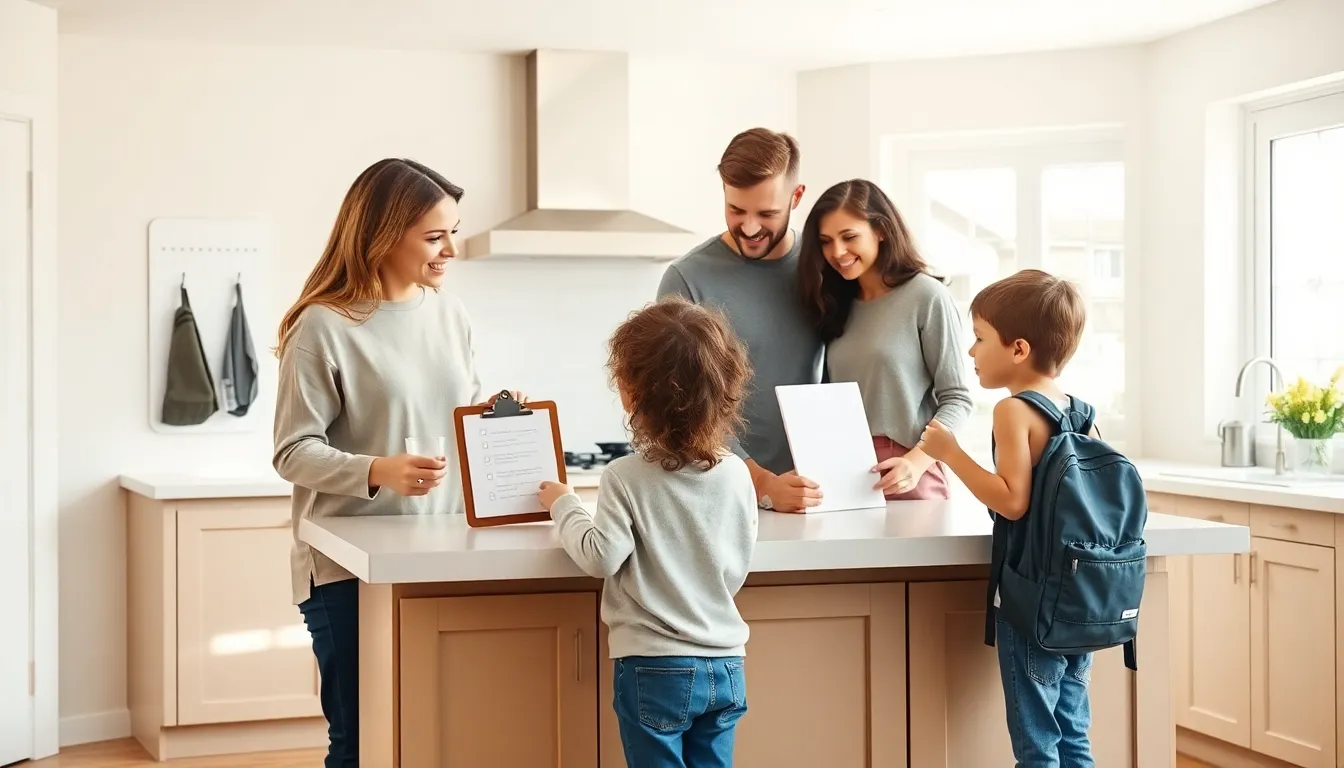
- Pack bags the night before
- Create a launch pad near the door for shoes, keys, and backpacks
- Leave the house at the same time each day
One family routines example that works well: the “ready by” time. Instead of yelling “hurry up” repeatedly, set a specific time when everyone must be ready. Kids respond better to clear expectations than vague pressure.
After-School and Evening Routines
The hours between school and dinner can feel like chaos. Kids are tired. Parents are juggling work. Everyone’s hungry. A solid after-school routine brings order to this transition.
The Decompression Period
- Allow 15-30 minutes of free time right after school
- Offer a healthy snack (hungry kids are cranky kids)
- Check backpacks for notes, assignments, and permission slips
The Assignments Hour
- Set a specific time for assignments each day
- Create a quiet, distraction-free workspace
- Be available for questions but don’t hover
The Activity Window
- Schedule extracurricular activities strategically, not every day
- Build in buffer time between activities
- Keep some afternoons completely free
The Dinner Routine
- Eat dinner together as a family whenever possible
- Assign age-appropriate tasks: setting the table, clearing dishes
- Use conversation starters to encourage real talk
Family routines examples for evenings don’t need to be rigid. Flexibility matters. Some nights will be busier than others. The goal is consistency, not perfection.
A practical tip: post the evening schedule where everyone can see it. Visual reminders help kids (and adults) stay on track without constant nagging.
Bedtime Routines for Better Sleep
Bedtime routines directly impact sleep quality. And sleep quality affects everything, mood, focus, health, and family harmony.
Here are family routines examples for bedtime:
The Wind-Down Period (30-60 minutes before bed)
- Turn off screens at least 30 minutes before sleep
- Dim the lights throughout the house
- Switch to calm activities: reading, puzzles, coloring
The Hygiene Routine
- Bath or shower (this can be calming for many kids)
- Brush teeth and floss
- Use the bathroom one final time
The Connection Ritual
- Read together for 15-20 minutes
- Share “highs and lows” from the day
- Say goodnight with hugs, kisses, or a special phrase
The Sleep Environment
- Keep the bedroom cool and dark
- Use white noise if helpful
- Stick to the same bedtime each night
Family routines examples at bedtime should feel peaceful, not rushed. If bedtime feels like a battle, something needs adjustment. Maybe the routine starts too late. Maybe there’s too much screen time beforehand. Small changes can make a big difference.
Consistency is key here. Kids’ bodies learn to expect sleep when the same routine happens every night.
Weekend Routines for Quality Family Time
Weekends need structure too, but a different kind. The goal isn’t to schedule every minute. It’s to balance rest, fun, and family connection.
Family routines examples for weekends:
Saturday Morning
- Sleep in a bit (but not too much, it disrupts sleep cycles)
- Make a special breakfast together: pancakes, waffles, or eggs
- Do one household chore as a family
The Activity Block
- Plan one family activity: park visit, bike ride, game night, or movie
- Rotate who picks the activity each week
- Keep some weekends completely unscheduled
Sunday Reset
- Prepare for the week ahead: meal prep, laundry, cleaning
- Lay out clothes for Monday
- Review the upcoming week’s schedule as a family
Weekend family routines examples should feel different from weekdays. They’re a chance to slow down and reconnect. Don’t fill every hour with activities. Boredom can be good, it sparks creativity.
One idea: create a “family meeting” on Sunday evenings. Review the week ahead, discuss any concerns, and celebrate wins from the past week. It takes 15 minutes and keeps everyone informed.
Tips for Building Routines That Stick
Knowing family routines examples is one thing. Making them stick is another. Here’s how to build routines that last:
Start Small
- Don’t overhaul everything at once
- Pick one routine (morning or bedtime) and master it first
- Add new routines gradually over weeks
Involve the Whole Family
- Let kids have input on the routine
- Use visual schedules for younger children
- Make it a team effort, not a top-down mandate
Be Consistent
- Repetition builds habit
- Aim for the same routine at least 5 days a week
- Expect resistance at first, push through it
Build in Flexibility
- Life happens. Routines will break sometimes
- Have a “short version” for busy or off days
- Don’t aim for perfection: aim for progress
Use Positive Reinforcement
- Praise kids when they follow the routine
- Consider reward charts for younger children
- Celebrate small wins
Family routines examples work best when they fit your family’s unique needs. A routine that works for one family might flop for another. Experiment. Adjust. Keep what works and ditch what doesn’t.
One more thing: expect setbacks. Vacations, holidays, and life events will disrupt routines. That’s normal. The goal is to return to the routine as quickly as possible.